Refinishing Hardwood Floors: Sand, Screen or Replace?
Worn wood floors rarely need replacing. Knowing which of three treatments your floor needs can save thousands and a week of disruption.

A solid hardwood floor is one of the few parts of a house designed to be renewed rather than replaced. Under the scratches and the dull patches by the door, the wood is usually perfectly sound.
The question is how much work it needs. There are three levels of treatment, and choosing the lightest one that will do the job saves money, time and wood.
First, find out what you have
Solid hardwood is typically three-quarters of an inch thick and can be sanded many times over its life. Engineered hardwood has a thin layer of real wood over plywood, and how often it can be sanded depends on that top layer.
Pull up a floor vent or look at a threshold to see the board in cross-section. If the wear layer is under about two millimetres, a full sanding may not be possible, though a lighter refresh still is.
Option one: screen and recoat
If the finish is dull and lightly scratched but the colour is even and no bare wood is showing, the floor may only need a new top coat. The existing finish is lightly abraded, or screened, and one or two fresh coats are applied.
This takes a day or two, creates very little dust and costs a fraction of a full refinish. It does not remove deep scratches, stains or grey, worn-through patches.
Option two: full sand and refinish
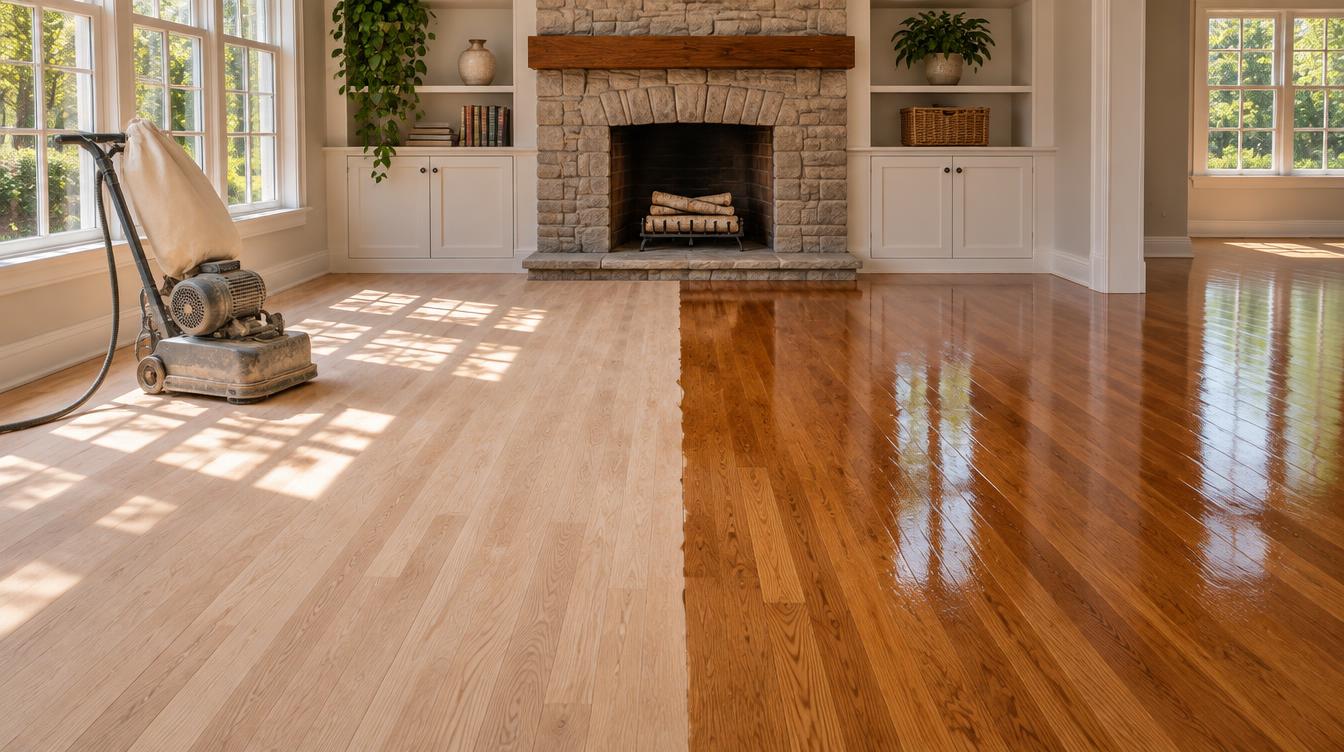
When the finish has worn through, or you want to change the colour, the floor is sanded back to bare wood. This removes a thin layer of the surface along with scratches, most stains and every trace of the old finish.
The floor is sanded in several passes with progressively finer abrasives, then vacuumed, optionally stained and sealed with two or three coats of finish.
- Coarse pass to remove old finish and level the boards.
- Medium pass to remove the scratches left by the first.
- Fine pass to prepare the surface for stain or finish.
- Edging and corners by hand or with a smaller machine.
A drum sander removes wood very quickly. That is its whole purpose, and its whole danger.
Option three: replace
Replacement is the right call when boards are structurally damaged: cupped from long-term moisture, eaten by insects or sanded so many times that the tongues are exposed.
Isolated damage can often be repaired by weaving in new boards and refinishing the whole room so the colour matches. A good floor specialist will tell you which is realistic.
| Treatment | When it suits | Typical time | Disruption |
|---|---|---|---|
| Screen and recoat | Dull finish, no bare wood | 1 to 2 days | Low |
| Sand and refinish | Worn through, stains, colour change | 3 to 5 days | High |
| Replace | Structural damage, wear layer gone | A week or more | Very high |
Choosing a finish
Water-based polyurethane dries clear, has little odour and can be recoated within a few hours. It keeps pale woods looking pale.
Oil-based polyurethane adds a warm amber tone that deepens over time. It takes longer to dry and smells strongly while it does, so plan to be elsewhere.
Hardwax oils soak into the wood rather than forming a film. They give a natural, low-sheen look and are easy to touch up in patches, though they need more regular care.
Stain or natural?
Staining changes the colour before the finish goes on. It is also the hardest step to get right. Some species, maple in particular, absorb stain unevenly and can look blotchy.
Always ask for sample patches on your own floor, sanded and sealed, before choosing. A colour chart tells you very little about how a stain will look on thirty-year-old oak.
Should you do it yourself?
Sanding equipment can be rented, and plenty of homeowners refinish their own floors. It is hard physical work, and the drum sander is unforgiving. Pause for a second with the drum down and it leaves a dip you cannot hide.
If you want to try, practise in a bedroom or a cupboard before attempting the living room. Screening and recoating is far more forgiving and a sensible first project.
Living through it
A full refinish means emptying the room completely and staying off the floor between coats. Light foot traffic in socks is usually fine after a day. Furniture should wait several days, and rugs longer, while the finish cures fully.
Modern sanding systems capture most of the dust at the machine, but some will still travel. Seal doorways with plastic sheeting and cover vents.
What it costs
Refinishing is generally priced by the square foot, and quotes vary with region, the condition of the floor and whether staining is involved. Stairs, repairs and furniture moving are usually extra.
Get written quotes that list the number of finish coats and the product by name. Three coats of a quality finish last much longer than two coats of a cheap one.
A floor worth keeping
A refinished hardwood floor can look new for a decade or more with simple care: felt pads under furniture, a mat at each door and a damp, not wet, mop.
Before you price new flooring, find out what is already under your feet. It may only need a second chance.